A BIM of beauty.

Motif is the first agent-native platform for building design. Teams and AI agents design, coordinate, and refine together on one live, shared model in a browser. Open, collaborative, and built for the speed and scale modern projects demand.

Book a demo

Motif is the first agent-native platform for building design. Teams and AI agents design, coordinate, and refine together on one live, shared model in a browser. Open, collaborative, and built for the speed and scale modern projects demand.

AI isn’t a new tool. It’s a new foundation.

We didn’t just slap AI onto old software. We built a foundation with AI at the core, so people and agents could actually work together to reimagine how work gets done.

You say it. We build it.

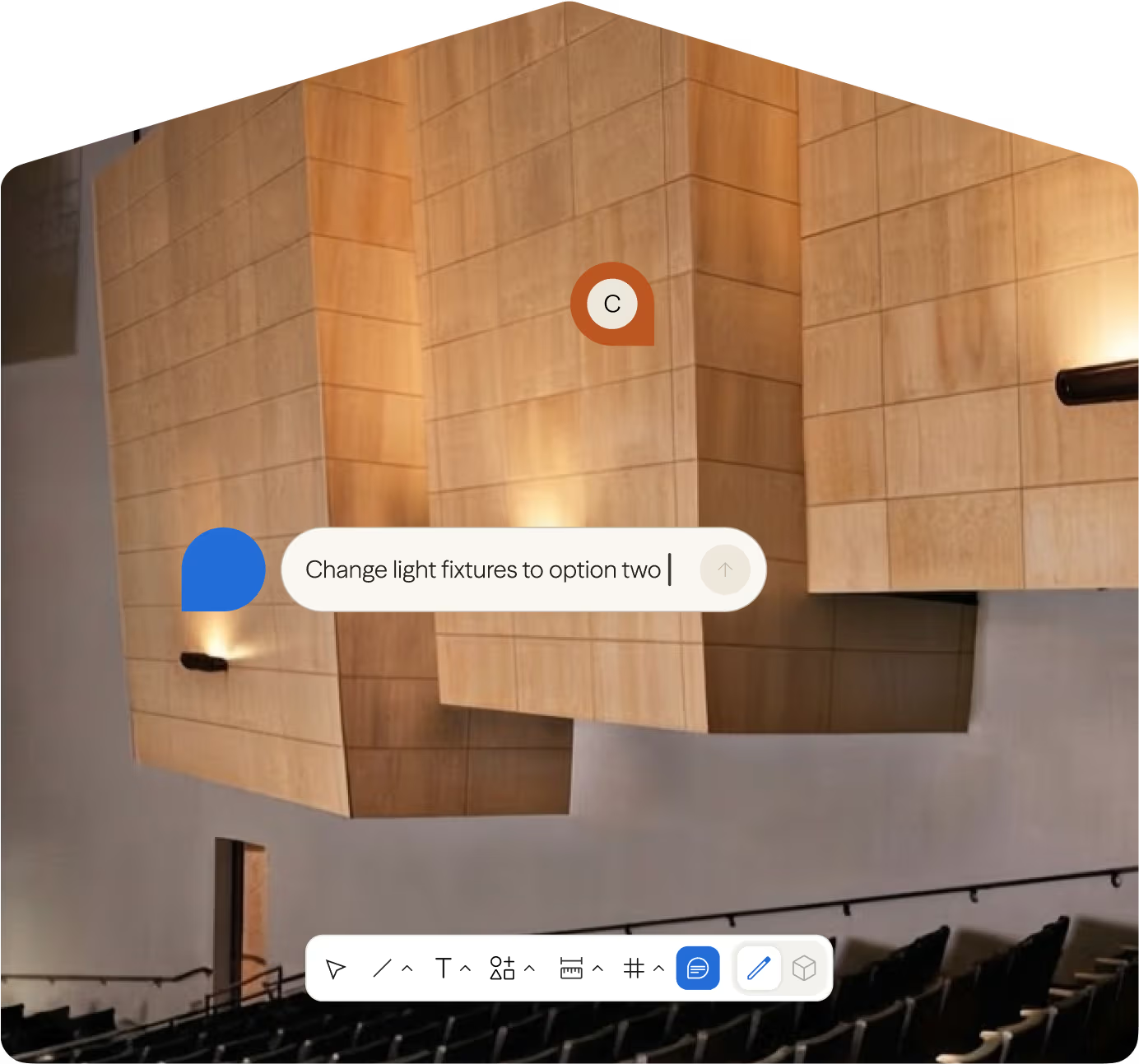
Say what you want and watch it become real. A sketch becomes space. A photograph becomes a fixture. A question becomes a drawing set. Every edit is tracked, so you can follow an idea as far as it goes and still come back.
Your personal guide to any design.

Ask Motif about a design, in plain language. What changed last week? Which doors are missing a fire rating? It doesn't matter who built it, or whether they made it in Motif, Revit or Rhino. Every answer comes with receipts.
Hand off the busywork.

Ask Motif's agents to do the work nobody wants. Check the design against the brief. Find real products that match the spec, building code and conditions. Pass the drudgery to something that never tires of it.
Build an expertise library.

Do it once and Motif remembers. Any tool one person built for one project, and every skill Motif learns along the way, can be shared with the whole team — so your firm's knowhow compounds across projects instead of walking out of the door.

Designing a building shouldn’t feel like being crushed by one.  

This is true browser-based BIM built for the modern world – fast, intuitive, open and instantly connected to every other tool and system you use.

See all capabilities
Curved white modern building exterior with small square windows, set against a clear light sky.

It actually works – and looks
– like you’d expect.

Genuine parametric, associative modeling that scales to any project, with models that look like real buildings. And anyone can use it. You don’t need six months of training to join a BIM priesthood with its own secret language.

Minimalist photo of geometric brown architectural structures with clean lines against a pale sky.

All your models and context together.

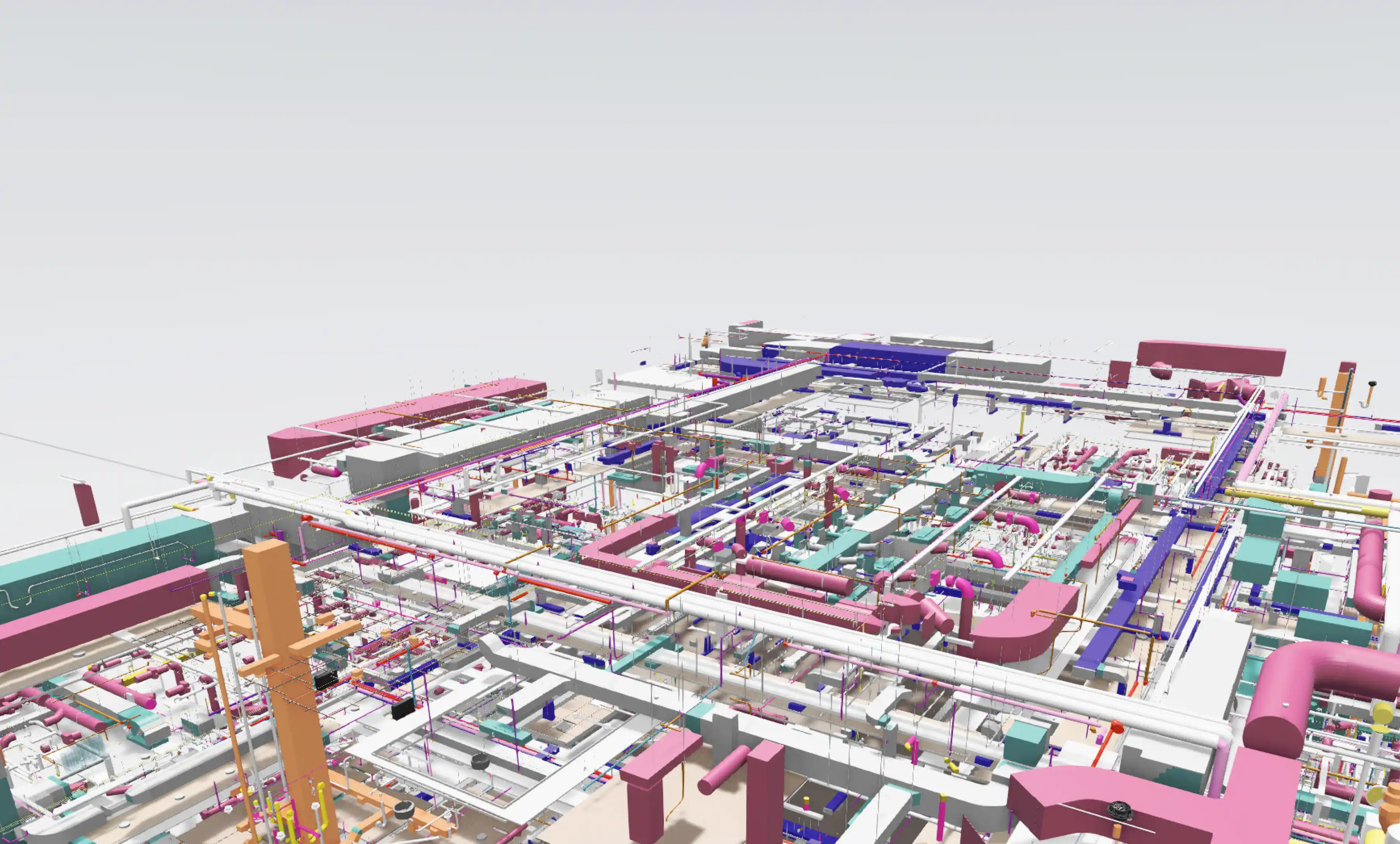
Stream in your Rhino, IFC, and Revit models, live, no exporting or converting, so the context from every tool is right there while you design.

Curved beige architectural structure with grid pattern panels and large glass windows, featuring red annotation circle and arrow labeled 'AMY S.' pointing to a section near the peak.

Open and flexible by design.

Motif's data model is open and queryable. Add your own object types, properties, and behaviors as your firm needs them, and they stay yours. No closed formats, no proprietary trap doors, no data held hostage.

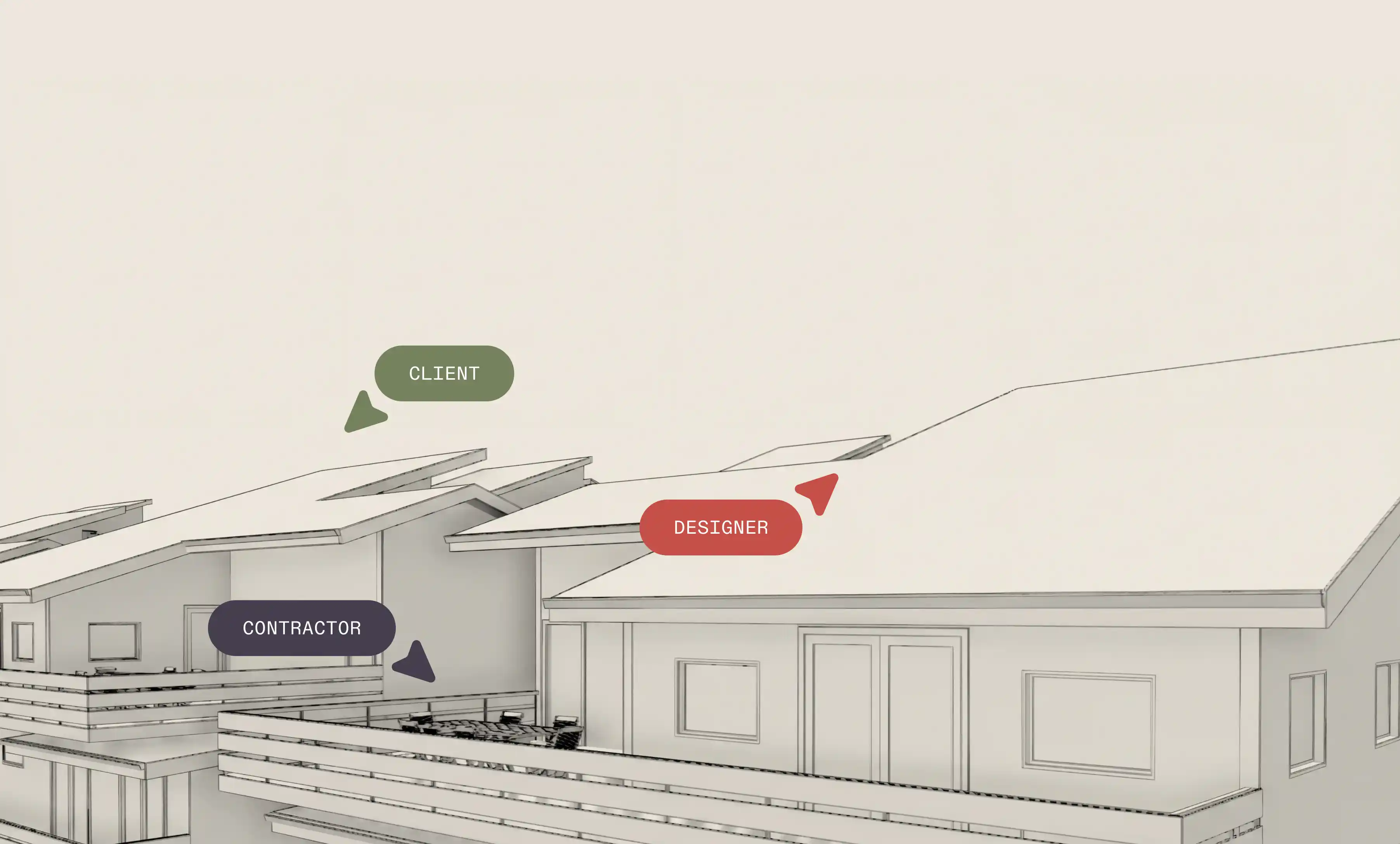
3D architectural sketch of a modern house with three labels pointing at different roof sections: CLIENT in green, ARCHITECT in red, and DESIGNER in dark blue.

Everyone in the same model.

Your team, your clients, and AI agents, can all be in the same live model, in real time, right from the browser. One model means one truth: every comment lands in context, and there's no wrong version to edit.

Proven in practice.

Motif is working to solve some near-term problems for us in terms of how we work and the efficiencies within our industry, but also opening up new ideas and new opportunities for how we might explore design in the future.

Shane Burger

Chief Design Technology Officer, Skidmore, Owings & Merrill

Motif came to us asking questions, not bringing solutions – which piqued our interest. That’s someone we can partner with. They’re very focused on the design process. Not trying to change it, but bringing technology to it.

Nick Cameron

Principal, Director of Digital Practice at Perkins&Will

Talking with a group that just wants to help and understand what we’re doing – it’s been a breath of fresh air.

William Carney
Design Technology Leader, Principal at DLR
Interior stairwell with wide brown steps leading to a large window with black grid framing light green leafy trees outside, concrete walls, a bulletin board with papers on the left, and a metal railing on the right side stairs.

One tool for your principal, your designer and your client.

No more printing things out or exporting files. No more IT tickets or installs. Everyone just goes online to view, comment on, or edit your model. Simple. Finally. 

What makes us actually different.

Sketch of a modern architectural building with a horizontal, layered design composed of scribbled lines, creating two main connected blocks.3D architectural model interface showing a modern building with a courtyard. The building facade features a grid pattern wall with white, gray, and orange panels, windows, and outdoor seating areas with round tables and chairs under canopies. A smaller inset window displays a 3D mesh of polygonal surfaces with control handles for editing.

Built for the age of AI.

Slapping an AI chat on old software doesn’t fix it: the AI can’t see half your data, and the system underneath only runs one task at a time.

Motif was built for many agents working in parallel on a model they can fully comprehend, so you can compare whole schemes in moments and ask questions nobody scripted for.

Abstract architectural detail showing angled tan and brown walls against a pale sky.

An open platform, not a fixed feature set.

Every capability we ship works out of the box, but none of it is the ceiling. Save a workflow as a skill, build your own UI for a task nobody added a button for, connect it to the tools your firm already runs on. Two firms using Motif for six months end up with two different tools, each shaped to how they actually work.

Modern architectural building with smooth, flowing beige curves and grid lines and tall dark glass windows, with a red circle and arrow pointing to the left curve labeled 'AMY S.'.

You make the choices. AI builds the model.

First tell it the parameters: the customer requirement set, the constraints, the program to be solved. From there, the AI helps you shape the model, reasoning out the design instead of just rendering geometry. With Motif, geometry is the output, not the input.

A solid foundation.

We know what’s needed – and what needs to change – because we built much of the software you’re already using.

Meet the team

Design differently with Motif.

FAQs

Who is the team behind Motif?

Motif was founded by the former CEO of Autodesk and the team that built Revit and AutoCAD, the tools the AEC industry runs on today. They built Motif because they knew the industry deserved better. This isn't disruption from the outside. It's the original builders reimagining what's possible.

What is Motif Design?

Motif Design is a modern BIM platform where architects and AI agents model, evaluate, and document a building together, all from the browser.

Who is Motif Design for?

Motif Design is built for architecture firms of any size, from principals running the whole project to junior architects doing day-to-day modeling, and the clients they're presenting to. It's a fit for teams that want to model, review, and document together in one place, and use AI throughout that process rather than as an add-on.

Does Motif Design replace my existing tools?

Motif Design works alongside the tools you're already using: bring in models from Revit, Rhino, and IFC, and pull in context from tools like Slack, Teams, and OneDrive.

What can the AI in Motif actually do?

Motif Design is agent-native, meaning AI agents are built into every part of the product and can take any action a human user would. Agents can answer questions about the model, make changes, and test against requirements. You can also save specific agent workflows as skills, to customize Design to suit how your firm works.

Is my project data used to train AI models?

No. Every AI provider we work with is contractually committed to never train on your projects. Your data stays yours, and it's never used to train third-party models.

Can Motif Design scale to large projects?

Yes. Motif Design is built on distributed computing and GPU performance, so large, complex models stay responsive, and your team doesn't need to split a project into separate files to keep it usable.

What tools does Motif Design integrate with?

Motif Design imports live models from Revit, Rhino, and IFC, and connects to the tools your team already relies on for communication and files, including Slack, Microsoft Teams, Email, Notion, OneDrive, and SharePoint. Context flows both ways: pull it in from those tools, or have the agents send it back out, instead of it staying stuck in someone else's file.

How much does Motif Design cost?

Pricing is based on the number of active users on your team and AI credits are included for everyone. Plans are tailored to your firm's size and needs, so reach out to our sales team or check the pricing page for a plan that fits.

Do we need to install anything, or get IT involved?

No. Motif runs in the browser, so a principal, a junior designer, and a client can all open the same project and be productive right away.