More than a mall: Reconstructing the past and reimagining the future with Motif
Can you pinpoint the moment you felt pulled toward architecture? Maybe it was an eccentric building. Something a teacher said. The Sims.
For Josh, it was a demolition site.
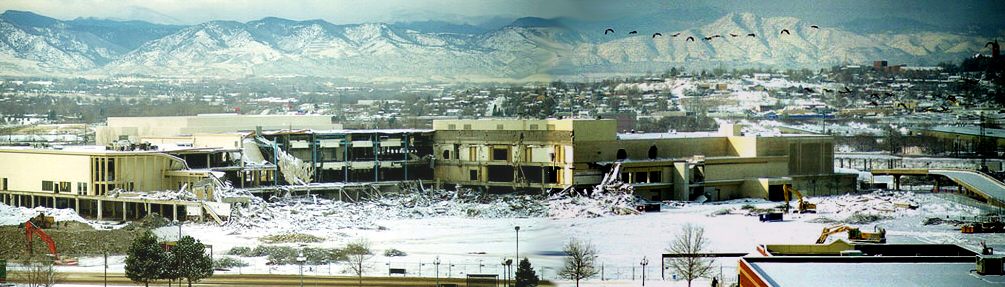
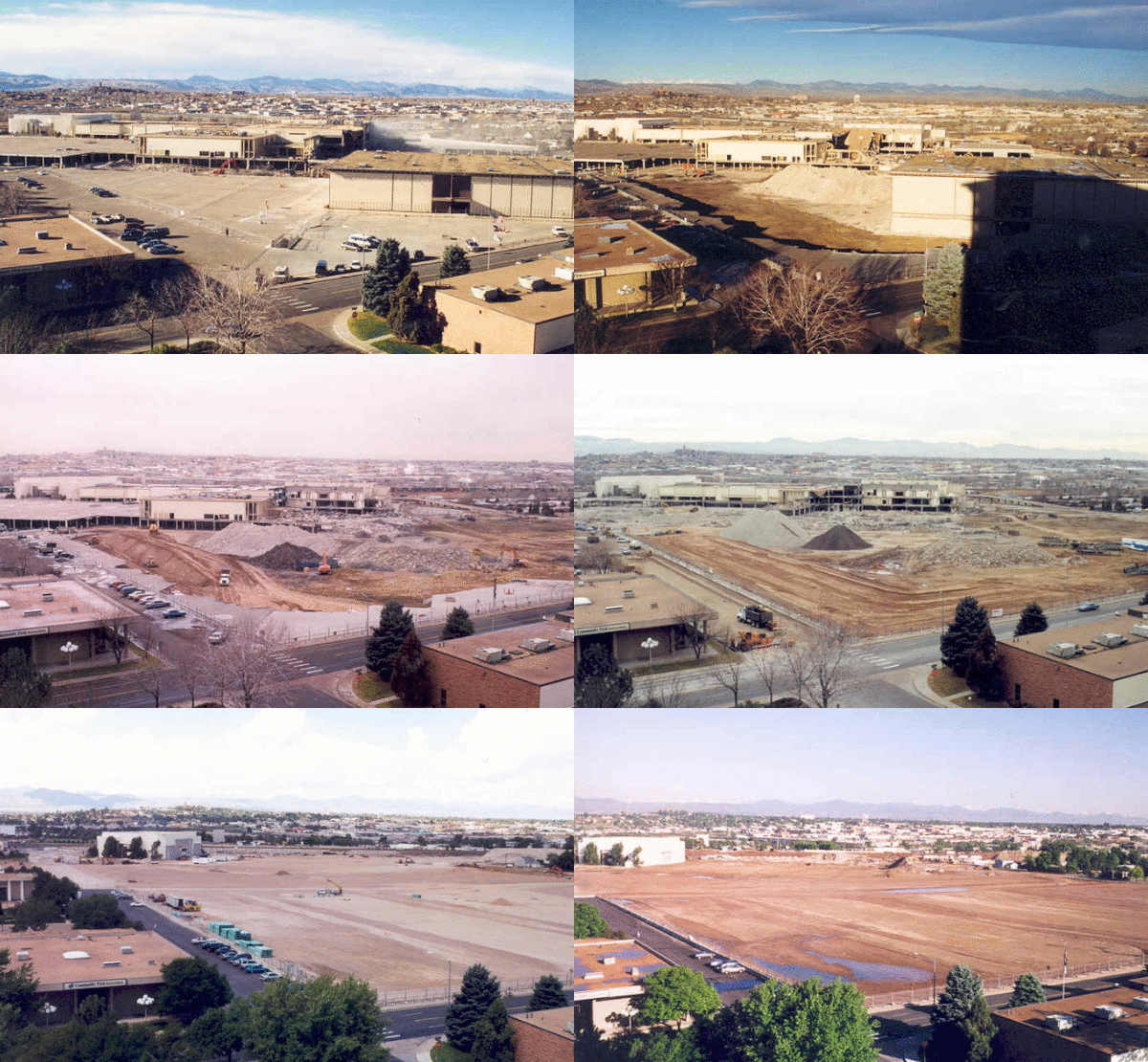
He was eight years old, passing through Englewood, Colorado with his parents, when he peered out the window and saw something that looked like a war zone: The demolition site of a giant shopping center formerly known as Cinderella City Mall. The crews had made enough progress that he could see into the dark depths of the structure: destroyed storefronts, shambles of corridors where people once walked, the emptied guts of a parking garage that surrounded the entire building.
.jpeg)
And it blew his mind. Something that large should stand for a hundred years, right? That's what his naiveté assumed.
But no. It had been a giant, beloved community institution for less than thirty years, a hub where people gathered, met their spouses, and started businesses. Somebody had spent millions to build it, and now millions more were being spent to tear it back down.
What was once the city's living room was just gone. Poof.
Josh wanted to understand how the places we build and love can be discarded so quickly. That question set him toward a career in architecture and software, giving him a unique opportunity to digitally reconstruct the mall and reimagine its second life.
Meet Josh

Today, Josh is on the Motif team, helping us build software for architects. But he never really stopped being an architect himself. He just found magic in architectural software development and learned how to code. He's also the kind of person who, at eight years old, responded to a demolished building by thoroughly researching its past.
Because that's the thing to understand about Josh and Cinderella City. This wasn't a passing interest. For more than twenty-five years, in one form or another, Cinderella City has been on Josh’s mind — a nerdy little side project, in his words, that has quietly followed him through his entire career. He's documented it, modeled it, curated a museum around it, and reimagined it more times than he can probably count. He even runs a dedicated website and Instagram for it.
So let's start where his research did. Not with the demolition but with the strange, doomed, over-ambitious thing that stood there for twenty-nine years before the empire fell.
A mall or a city?
Cinderella City was never supposed to be called Cinderella City. The moniker was used as a codename during development and stuck over the objections of nearly everyone — including, decades later, Josh. The name outlived every attempt to replace it and set the stage for a story that would become the antithesis of a fairytale.
Nobody wanted the mall in the first place. It was originally planned for another location entirely, and following a series of contentious community meetings and lawsuits rising to the Colorado Supreme Court, the developer convinced the City of Englewood to put the mall on their beloved city park over the objections of the community. Bisected by a creek and ringed by houses, the park was already a community gathering place.
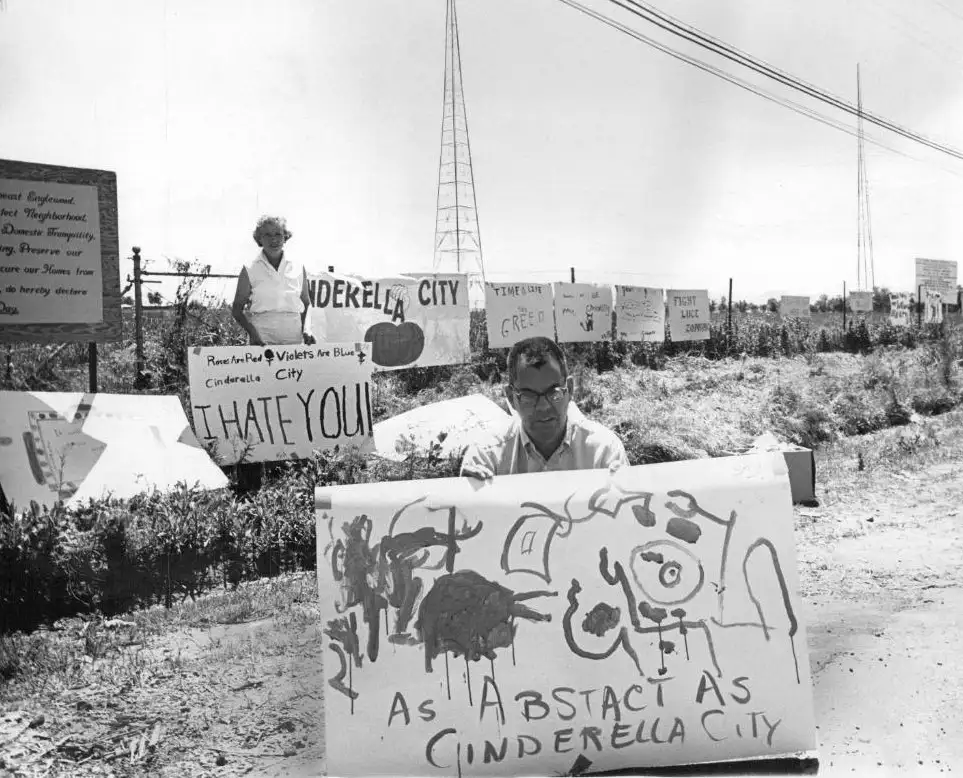
When construction started, the creek was buried, routed into a tunnel that still runs beneath the site to this day. The parking structure that wrapped the whole complex loomed over the backyards of homes that never signed up to live adjacent to a jungle of concrete ramps and decks.
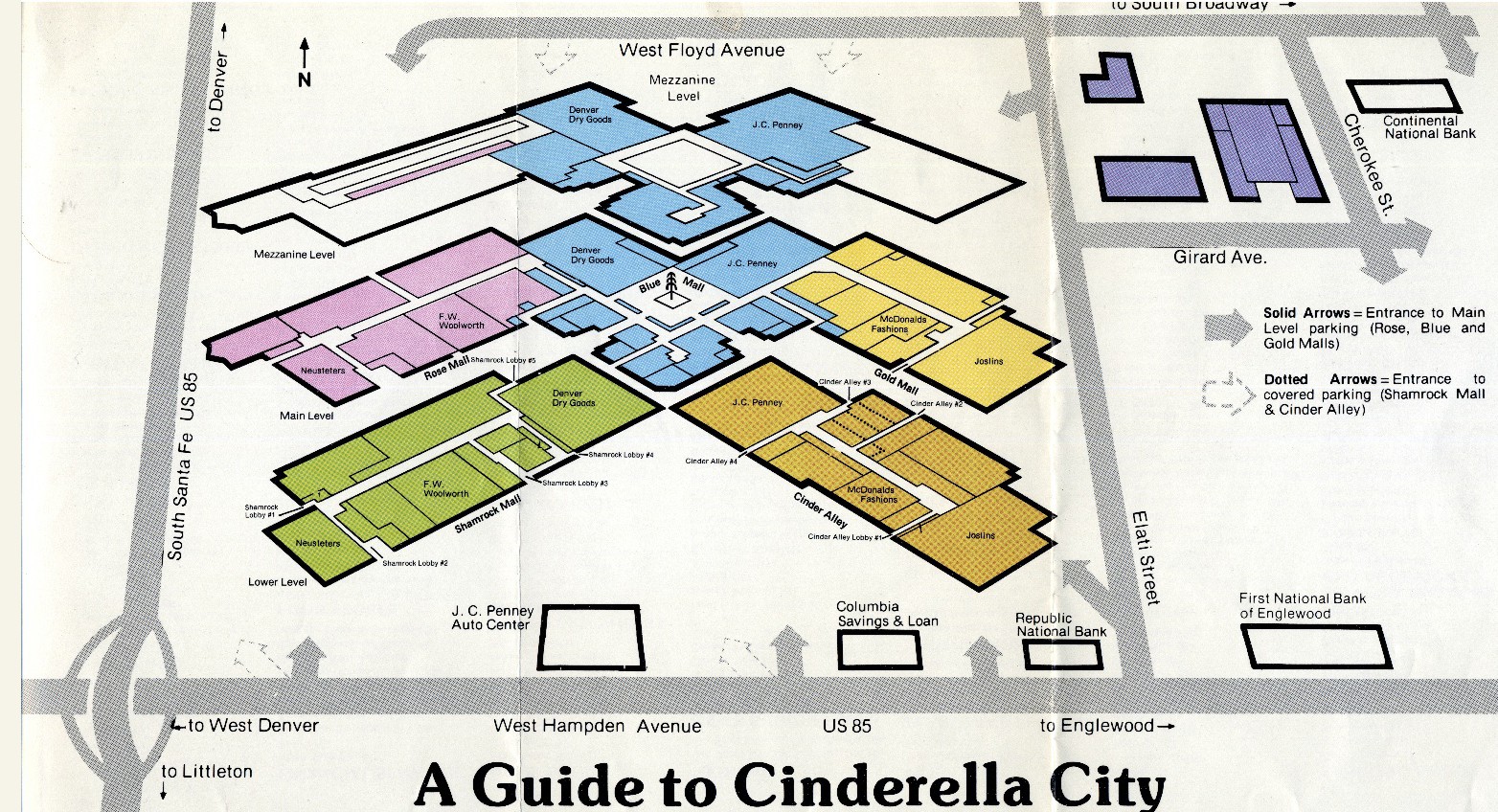
Despite the opposition, the mall opened in 1968. And it was enormous. 1.3 million square feet over 3 levels, 5 color-coded malls, and 7,000 parking spaces in a unique two-level garage. All in, the structure spanned 68 acres. While most malls of the era were modest L-shapes or a single spine of stores with a parking lot wrapped around it, Cinderella City was a bizarre M-shaped layout, driven by too much retail and too much parking shoehorned into an undersized plot of land.
.jpeg)
Cinderella City was so large that it was divided into sub-malls, each color-coded so shoppers could find their way: Rose Mall, Gold Mall, Shamrock Mall, and a lower-level bazaar called Cinder Alley, all of them radiating from a central court known as the Blue Mall.
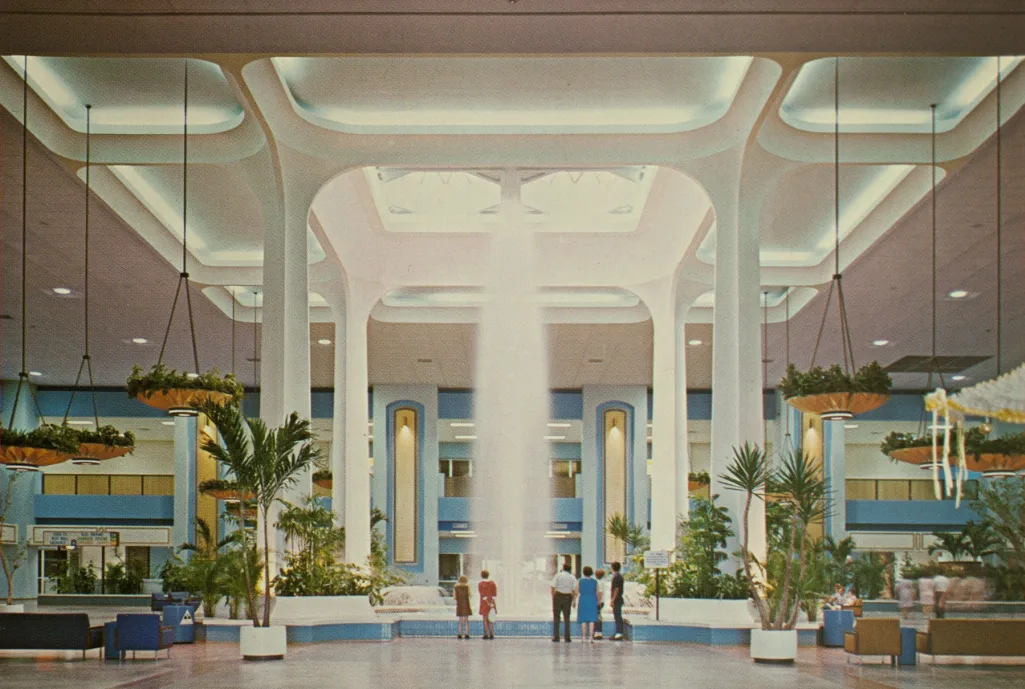
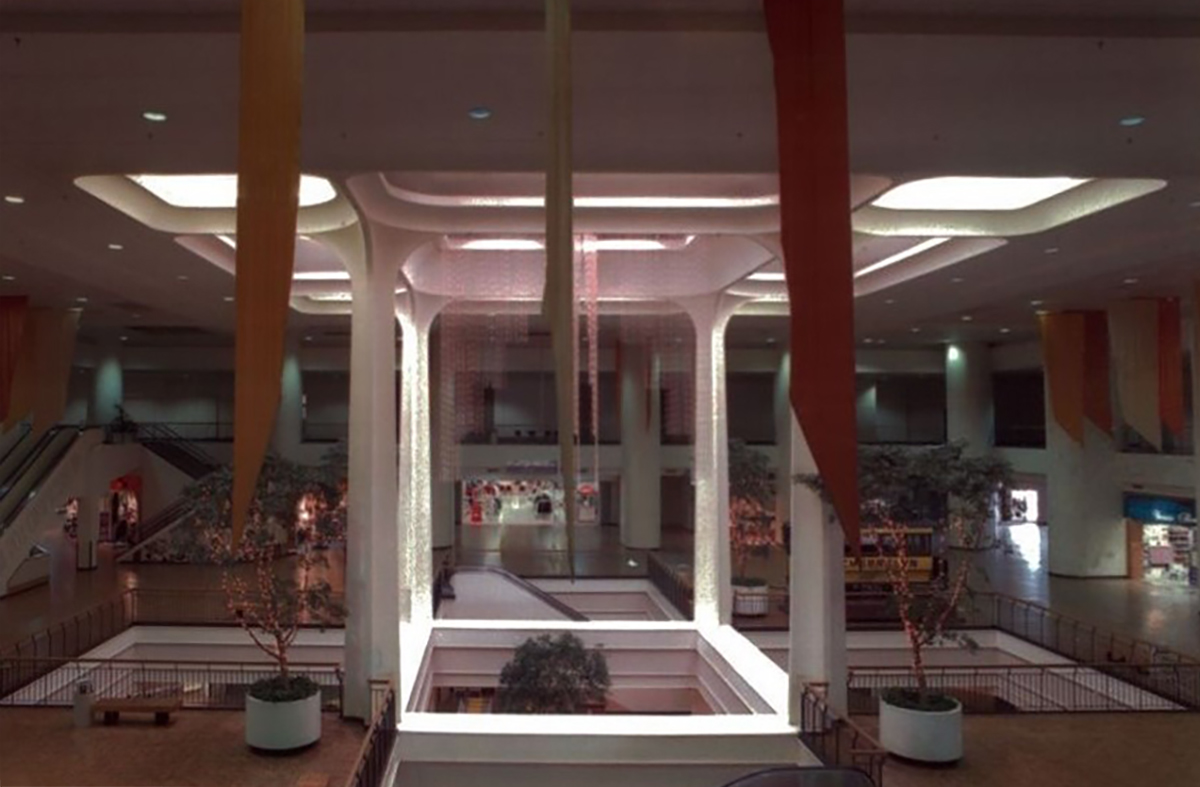
That center court, ostensibly designed as Englewood’s living room, was the showpiece with a 35-foot fountain spectacle spraying up toward the skylights. The mid-century interiors were lovely: Pastel and optimistic, a larger-than-life caricature of the 1960s American dream in mall form. But it wasn’t only a mall.
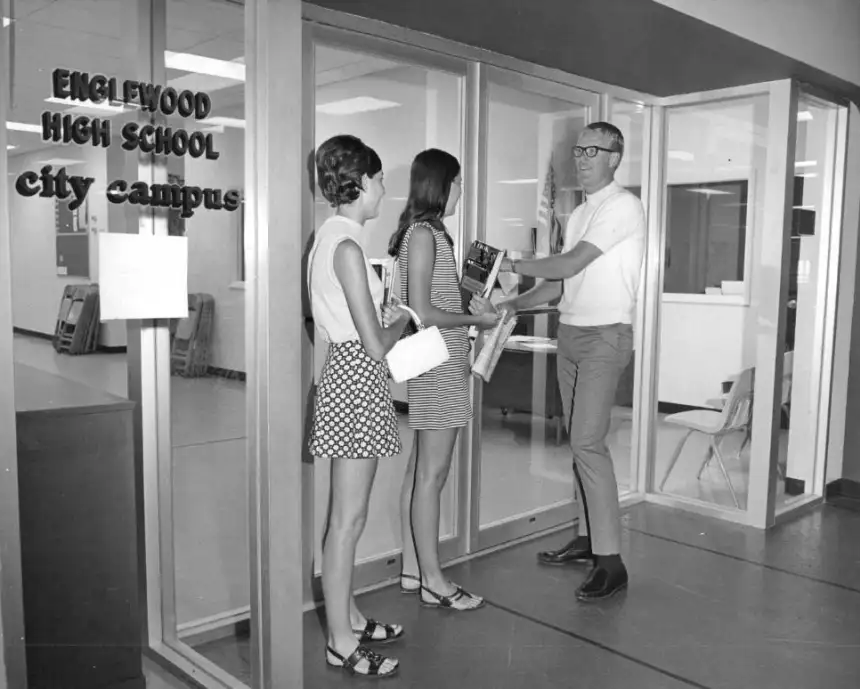
True to the second word in its name, Cinderella City was designed as an entire city under one roof. It was a precursor to today’s mixed-use developments, featuring office space, city services, a police and fire substation — and, remarkably, a functioning outpost of the local Englewood High School, featuring hands-on business and marketing classes that collaborated with the mall tenants. The mall also featured several modeling schools, a Department of Defense outpost, and civilian services like dentists and orthodontists.
The rise and fall
For a while, the gamble looked like genius. Two years after opening, the mall featured 213 tenants with over 31,000 daily visitors. By 1974, it generated fifty-two percent of Englewood's entire tax revenue — more than half of everything the city collected came from one shopping center.
But the cracks showed early, literally. In 1972, a routine inspection found concrete flaking off a pillar, and within a year the structural problems were in the Denver papers. The developer waved it off — "there was never any precarious situation or any danger out there that I'm aware of," he told a reporter — but the building was already beginning to show its age.
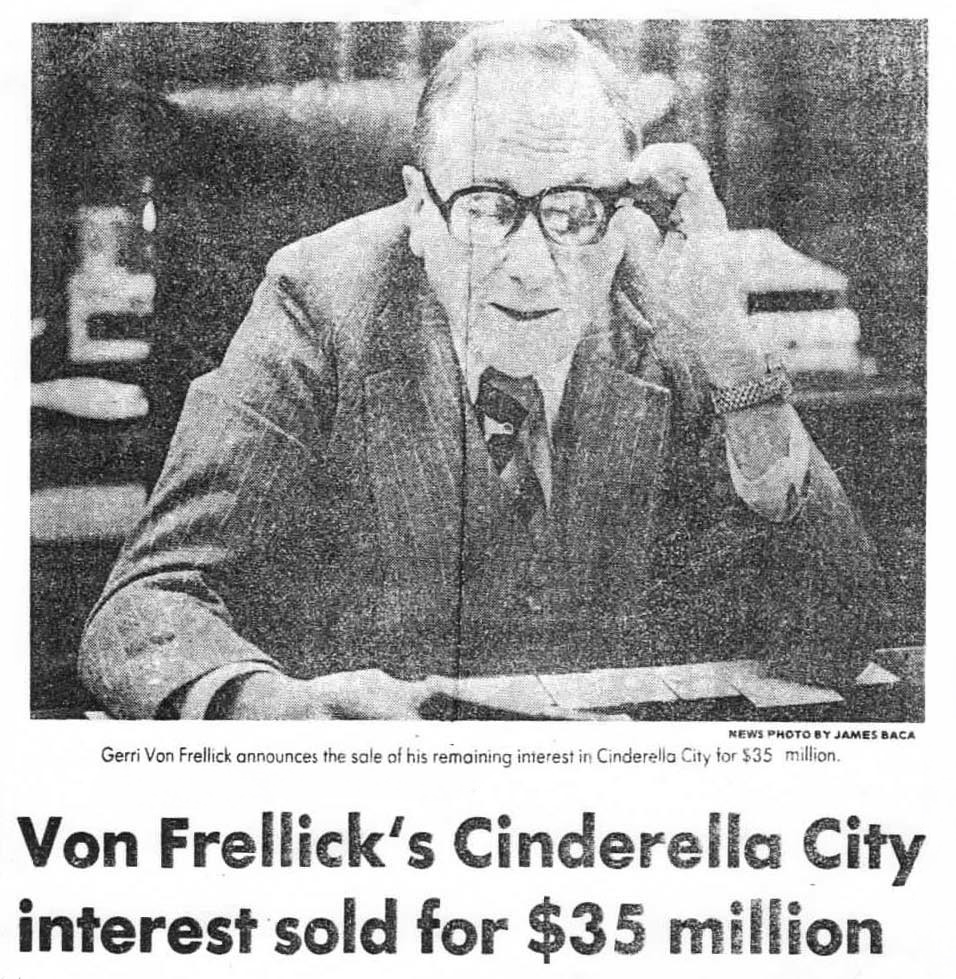
Next came what Josh finds so damning: the man who built it didn't stick around for long. In 1978, original developer Gerri Von Frellick sold his interest for $35 million and walked away, leaving the city with an aging building it leaned on for over half its revenue. From there the slide was steady.
A new owner and a major 1980s renovation bought a little time but by 1993, the mall was fifty-percent vacant and up for sale; and by 1995 it generated just 2.6% of the city's revenue. A place that had once been Englewood's economy was now a footnote.
Worse yet, the site was a major liability for the City of Englewood: With asbestos, lead paint, leaking underground storage tanks, and a variety of other environmental concerns, it was the nation’s largest “brownfield” site, requiring significant remediation for any redevelopment efforts.
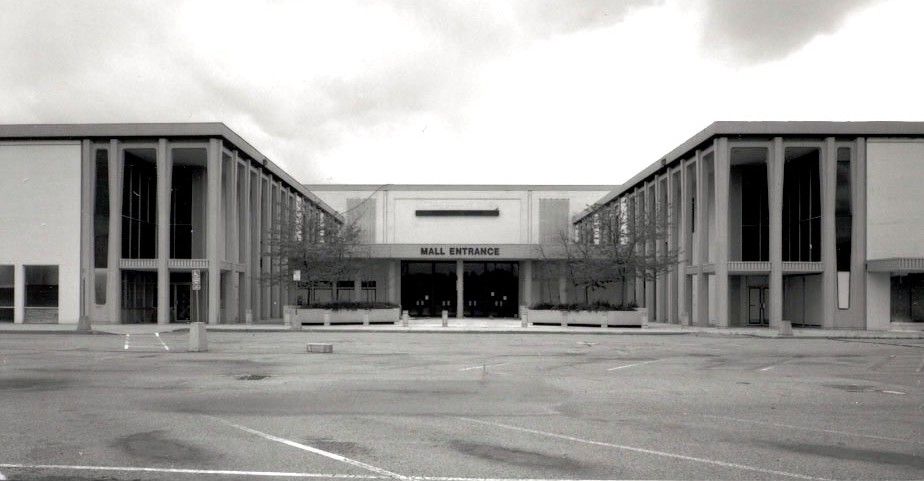
The end came on August 18, 1998, when Elmer Schwab — the former mayor who had presided over the grand opening thirty years earlier — watched a wrecking ball swing into the old J.C. Penney Auto Center. Most of Cinderella City came down over the following months. One department store survived, remodeled into a new city hall; nearly everything else became a mixed-use development anchored by a Walmart.
.jpeg)
It's a classic (and unflattering) American story: Someone builds their idea against a community’s wishes, makes money, and leaves the cleanup to someone else.
Rebuilding the mall with accuracy
There were a few major hurdles Josh faced when he decided to investigate where it all went wrong: Cinderella City had already come down, and he had never walked the corridors himself.
He didn't know the intricacies of the building. And this was 1998 — no drones, no Google Earth, not much aerial imagery a kid could get his hands on. The place he'd become fascinated by was, functionally, a mystery of the past.
So he did the only thing available to him. He started researching online and in libraries. He asked anyone who might have something: do you have photos of this place? do you have anything else? And slowly, over years, the research turned up the thing that made everything else possible: a tranche of original floor plans and blueprints from 1968, and another set from the 1980s renovation, revealing the true scope of its original design and how far it fell as the world evolved around it.

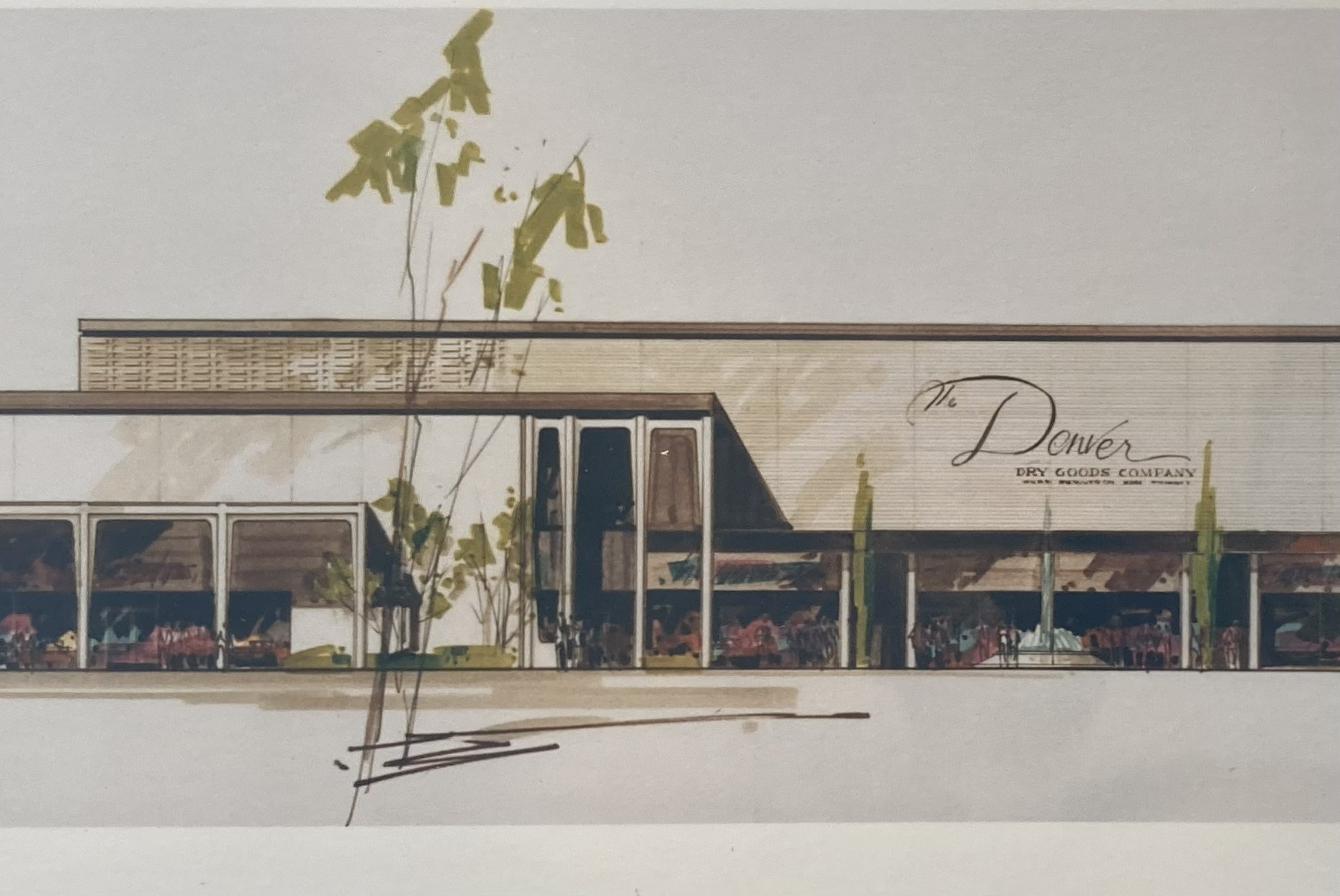
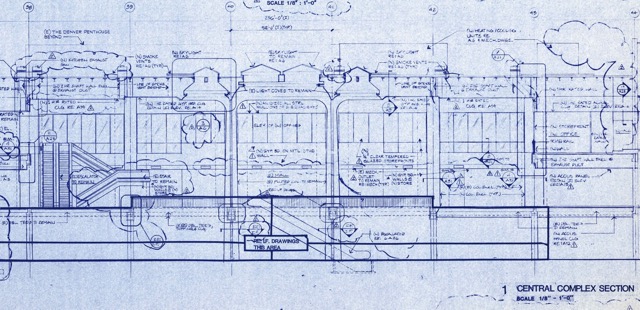
That's when his curiosity became an architecture project.
Because with the plans in hand, Josh wanted to rebuild Cinderella City — accurately. In his earliest years, he used LEGOs. Then he learned 3D modeling in SketchUp. And when he worked at Autodesk, he built it again in FormIt. And he built it the way you'd design a building today, to an architect's accuracy, down to the inch.
The spacing between the structural columns was critical. Once he got that measurement right, everything else fell into place. Storefronts, signage, escalators, light fixtures, door handles. It’s all there.

Eventually, Josh took the project to the next level. He built two versions of the mall: The first 10 years (1968-1978) and the last 10 years (1987-1997), with the plan to eventually allow for time-traveling between the two in order to illustrate the evolution of the mall through time.
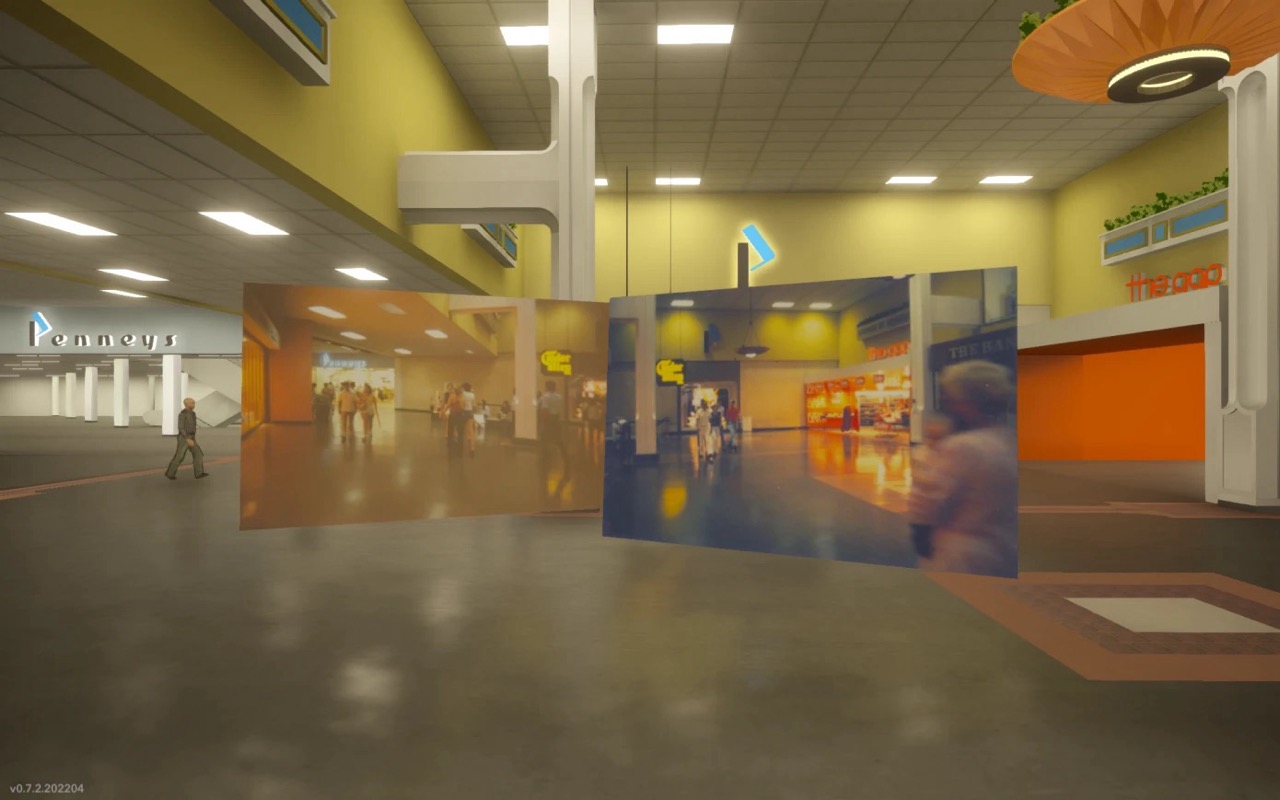
Then he brought the 3D models into a video game engine to add realism and interactivity. He learned to code and created his own custom behaviors and import utilities to convert the static 3D models into a fully interactive mall simulation with shoppers, fountains, muzak, and realistic lighting and reflections.
The time-traveling feature was the ultimate goal: Players could cycle between the two eras of Cinderella City while maintaining their position in 3D space.
.gif)
For a dose of realism, the simulation also features real photos of the mall hanging in the digital space, grounding it in history and offering a demonstration of the model accuracy. Eventually, the simulation would feature real recorded memories from shoppers who experienced the mall, creating an exhibit within an exhibit that combines audio recordings with the digital space.
Resurrecting and reimagining what could have been
Josh started a standing ritual on Motif's team called Arch Bash. Every couple of weeks, the architects on the team get together and use Motif the way a real firm would, finding out where the tool holds up and where it fails so we can fix it.
So in one session, Josh brought the mall. He wanted to use Motif AI rendering to both reconstruct the past and reimagine an alternative future.
It made a perfect test case because the thing is huge. Sixty-eight acres is so much building that every person on the team could claim their own corner of it — a wing, a department store, an entrance — and go to work without bumping elbows.
Using Motif's AI rendering, the team pulled the old eras back into color: the pastel 1960s and the earth tones of the 1980s, complete with period-correct attire:
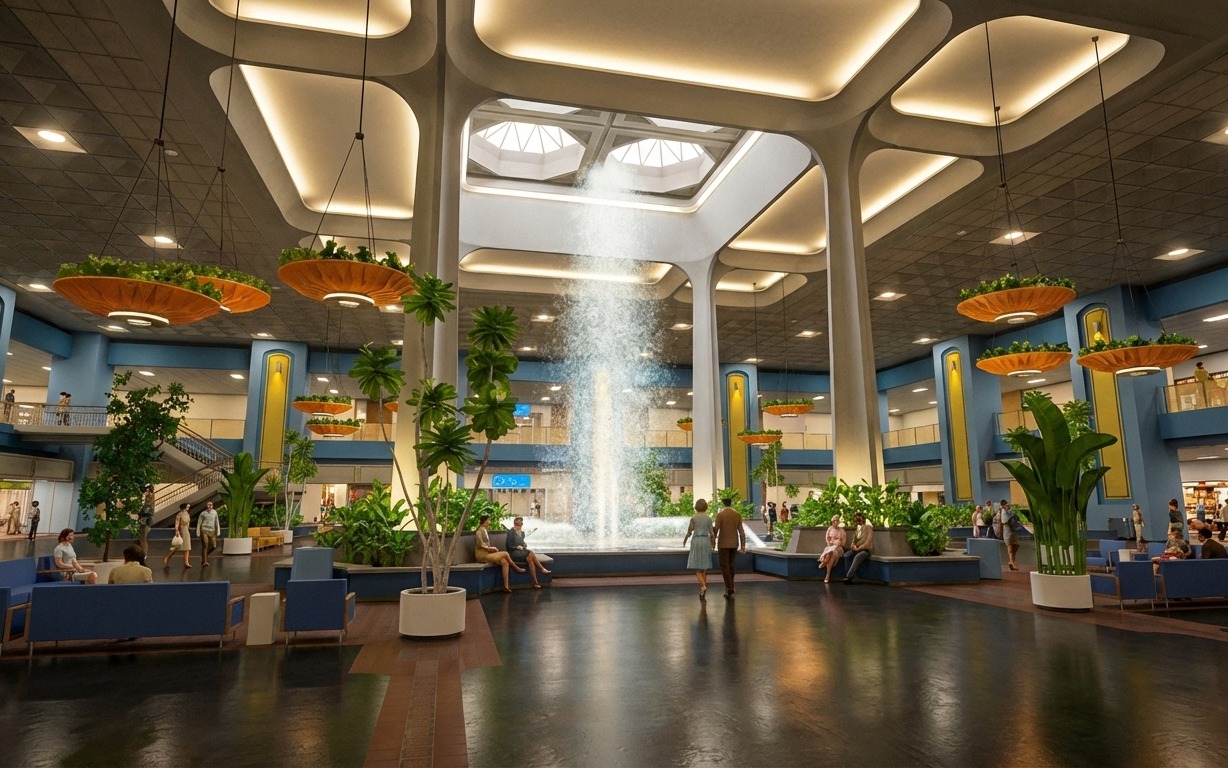
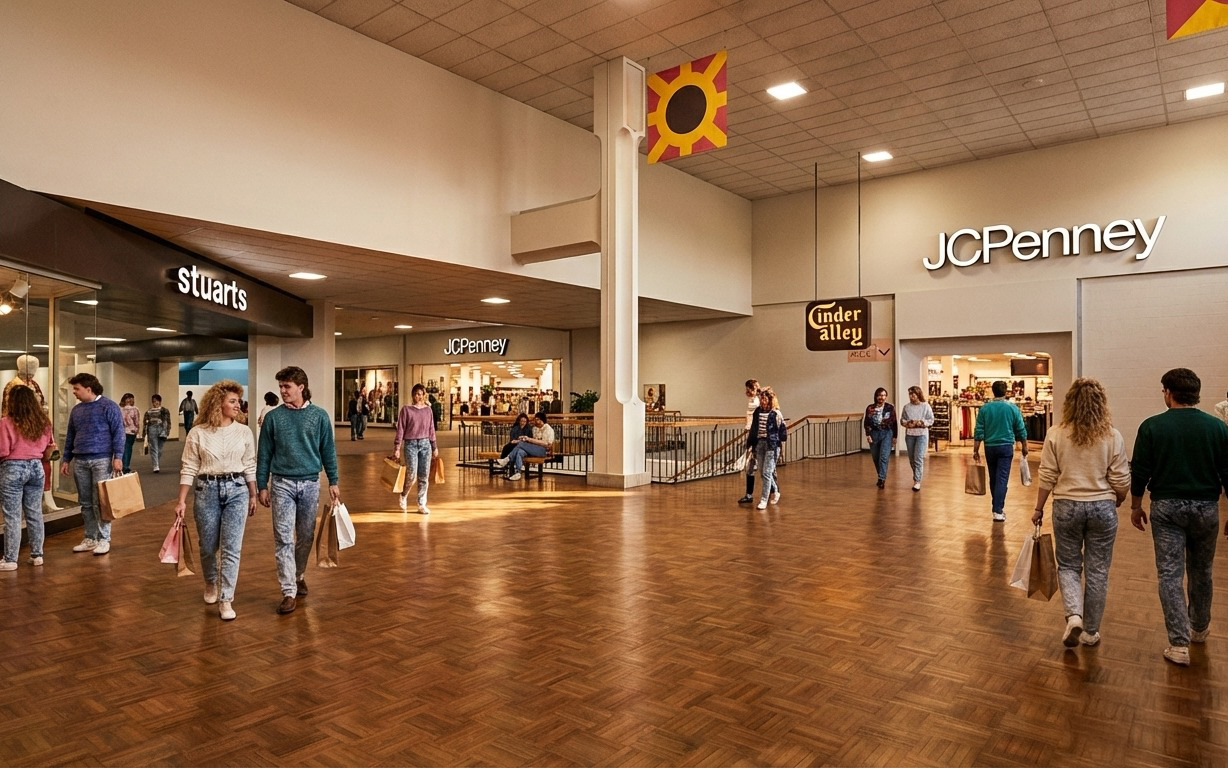
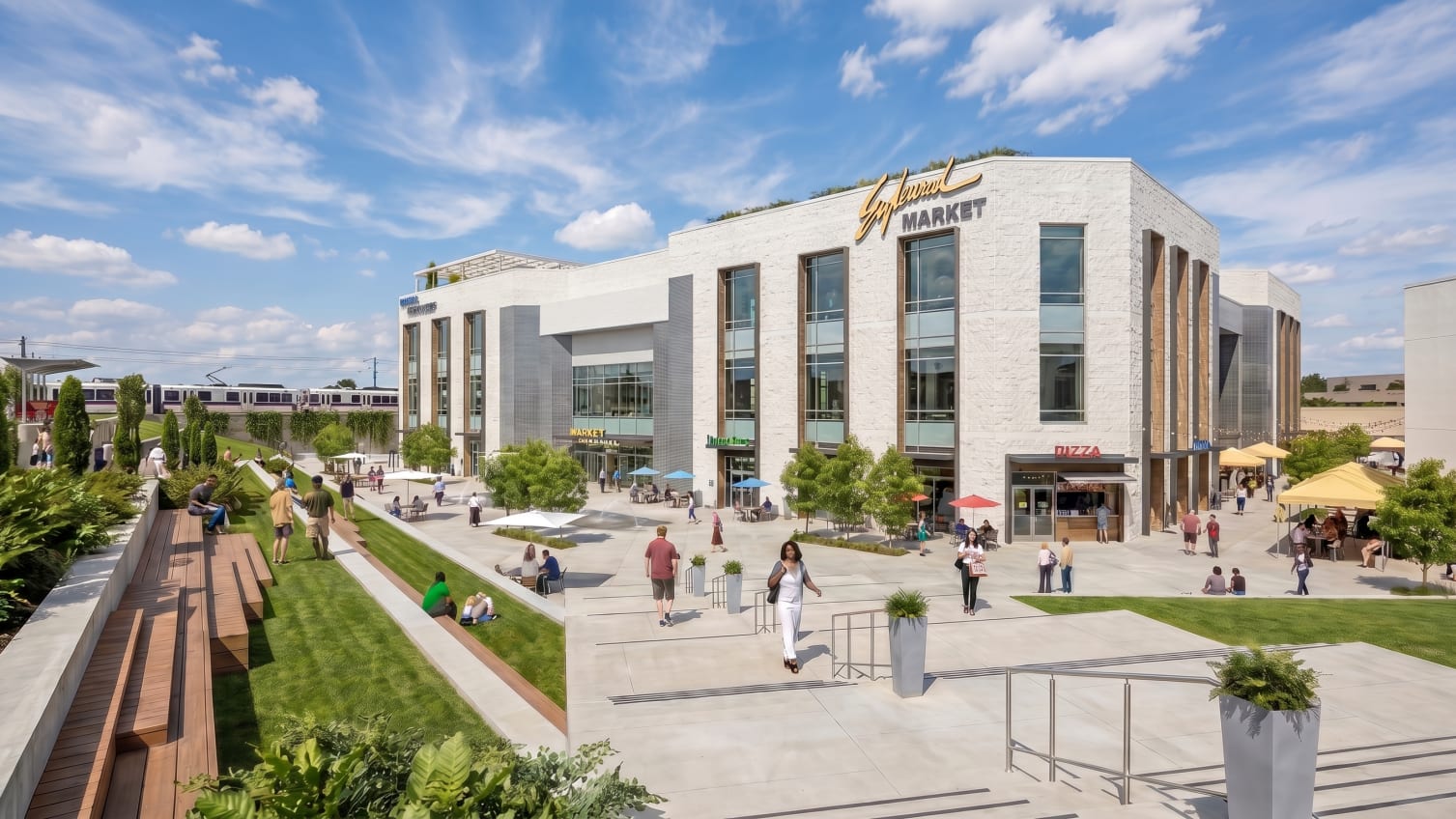
But the more interesting question wasn’t “What did this look like?” Rather, "What could this have become if it were given a second life?" So they used Josh’s accurate model to brainstorm adaptive reuse possibilities.
Reopen the buried creek and let it cut back through the site the way it did before the mall ever existed. Peel the roof off of the center court but keep the iconic sculptural columns, so the bones of 1968 stand in the open air. Turn the below-grade parking garage into a sunken park, flipping the concrete jungle of the past on its head. Build on top of the concrete structure — residential, offices, new retail — so the old mall becomes the foundation of a self-sufficient neighborhood instead of so much wasted material. Give the old Joslin's department store a second life as a museum of retail history.
%2520render%25201.png)
.jpeg)
Successful arch bash, indeed!
Keeping the memory alive
Josh’s efforts, now known as The Cinderella City Project, became well-known in Colorado history circles, thanks to several newspaper and magazine articles, plus live presentations Josh gave to excited fans.
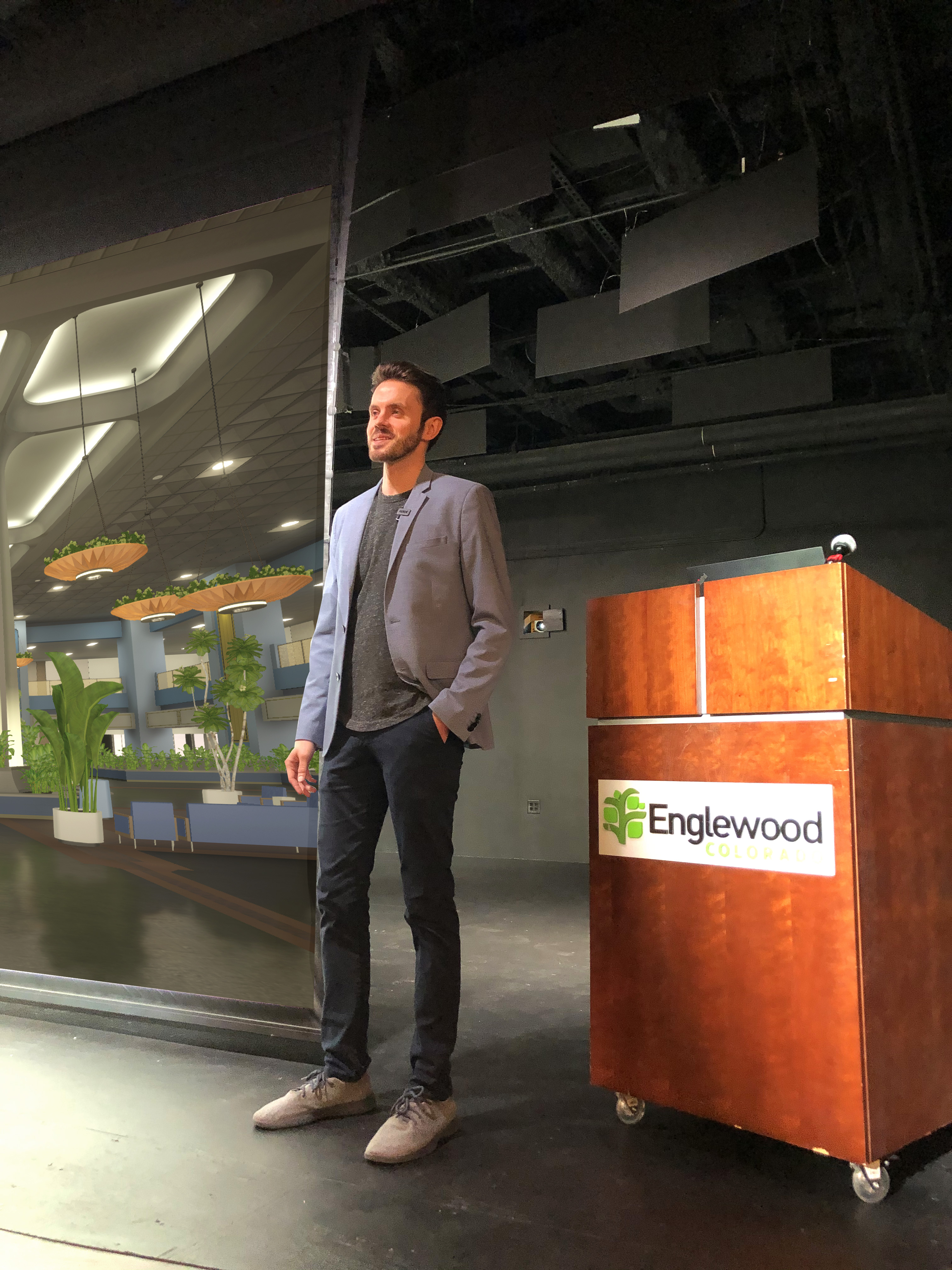
A few years ago, Englewood’s local historical society was presented with an opportunity to create the city’s first history museum. Their inaugural exhibit? Cinderella City. Josh helped the society design and build the exhibit inside, of all places, the one surviving building from the site: a former department store once attached to the mall.
As part of the exhibit, Josh tracked down and helped restore a giant hanging sign from the old Cinder Alley section, and helped mount it to the structure of the building. The exhibit also featured a banner from the mall recovered during demolition, handrails, merchandise boxes, and life-size vinyl graphics.
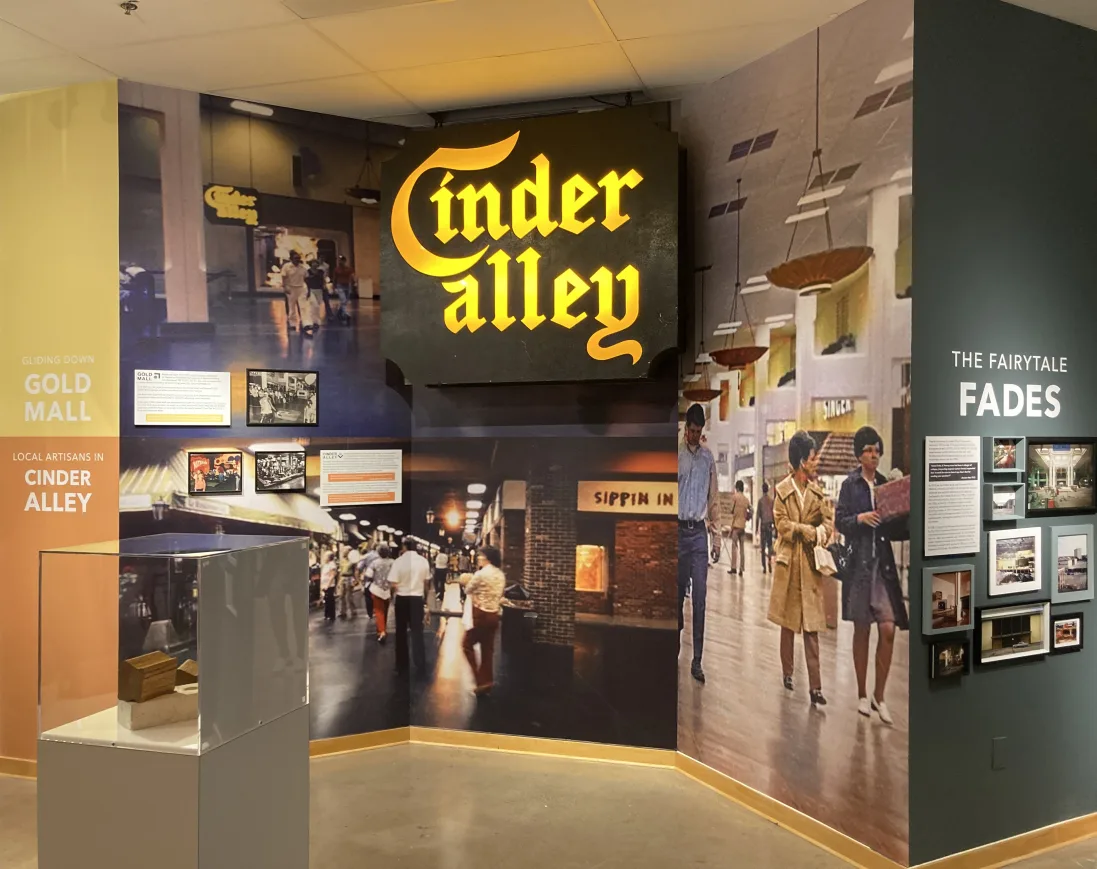
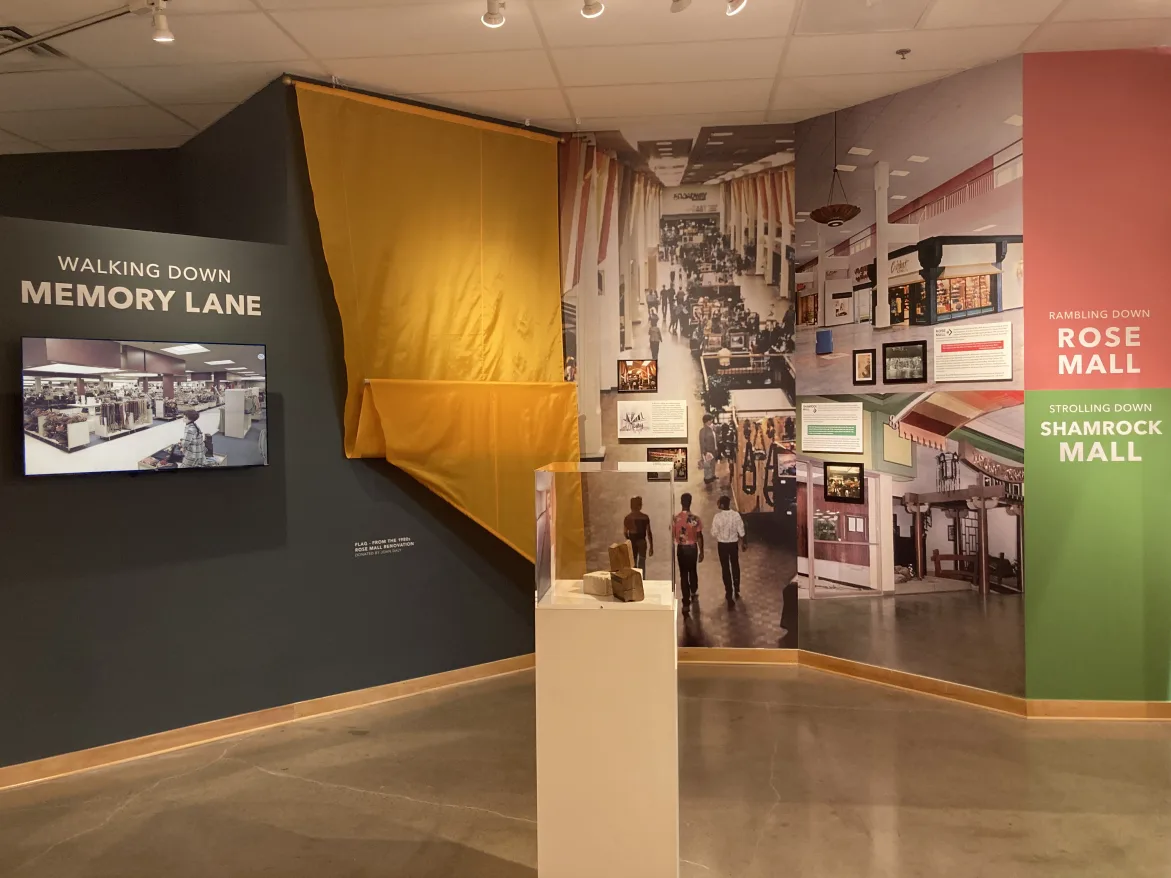
The final piece was the simulation. A 185-inch projection screen in a dedicated theater allowed museum visitors to walk through his 3D model either through a guided tour, or using an Xbox controller for intrepid mall fans.
The effect wasn't subtle. He had a theater full of visitors moved to tears, strangers volunteering stories about a place he'd studied for decades, and more than once, someone recognizing themselves in a photo that surfaced on the screen — that's me and my mom, 1979.
The whole thing had a dizzying, hall-of-mirrors quality: standing inside the former mall, showing people a simulation of the mall, walking them through the mall — then pointing at the screen to say, here's where we're sitting right now, in the real world and the fake one at once.
The exhibit was temporary, and has since closed. But for a while, a demolished building was standing again in projected light, inside its own last surviving room, full of the people it used to belong to.
What we do with what we discard
There's one piece of Cinderella City still standing, and Josh is trying to save it.
It’s a former department store that was saved from the wrecking ball in 1999 and became the Englewood Civic Center. It’s now slated for demolition as the City of Englewood once again plans to redevelop the former Cinderella City site.
But the building isn't that old. It went up in 1985 as part of the mall’s 1980s renovation. In the lifespan of architecture, that’s nothing. Tearing it down means another enormous pile of building waste, another structure discarded long before it had to be: the exact pattern that hooked an eight-year-old staring into a hole in the ground twenty-eight years ago.
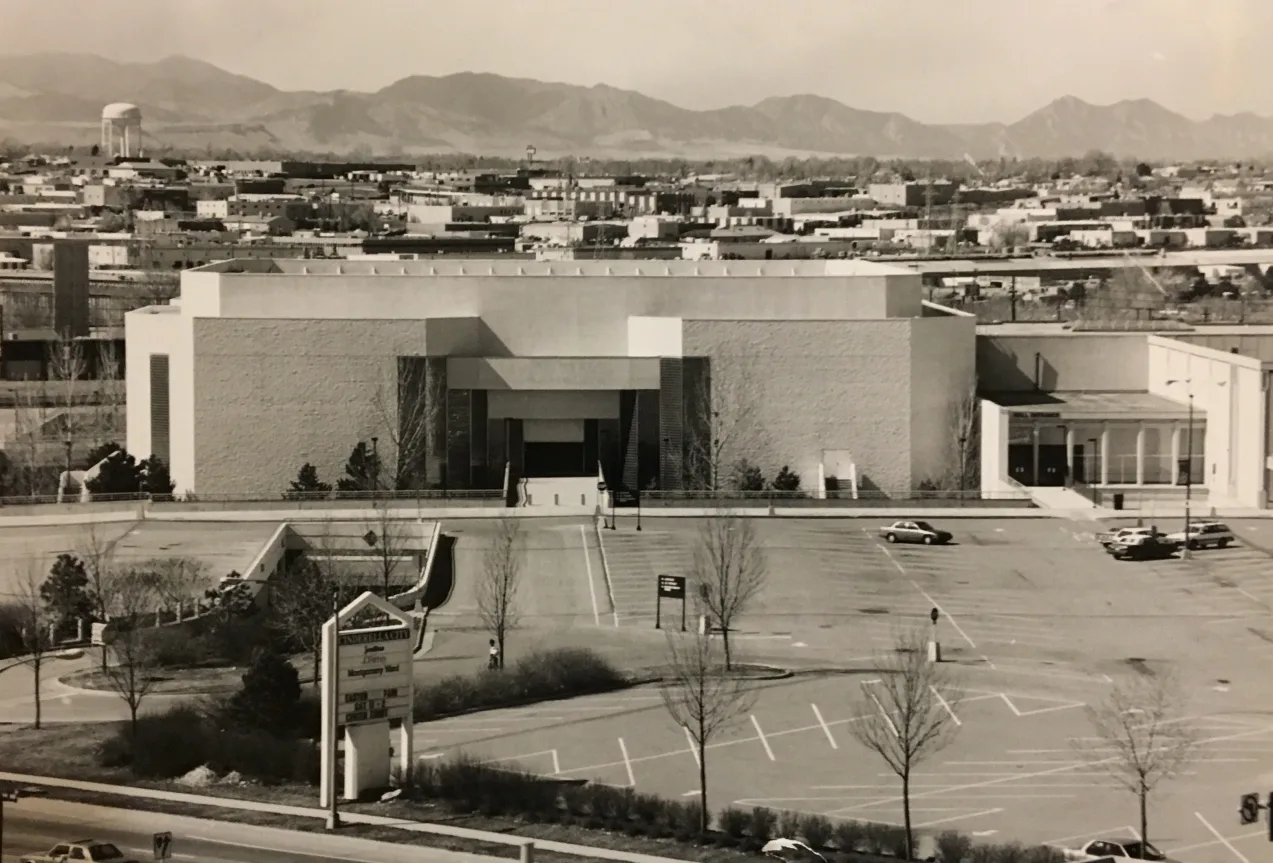
So Josh took charge. He built a change.org petition with a worked-out argument, proposing adaptive-reuse alternatives including a food hall on the lower level, a hotel or offices in the floors above. He made a video walking through the possibilities. You can read about it and sign the petition here.
After years of research, Josh acknowledges that the story of Cinderella City is no fairytale. It was a bad building in a lot of ways, born of contention and forced onto a community that didn’t want it. In the end, it hurt the City of Englewood more than it helped. It decimated the local Broadway corridor and left the city with a giant environmental and fiscal liability.
What's kept him circling it for three decades isn't a wish to have it back. It's a questioning of our societal ways: Why do we build things at enormous financial and ecological cost, use them for a fraction of a human lifetime, and then throw them away? And does it have to be this way?
He'd like the answer to be no. We passionately agree.
You can walk through what Josh has made and read more of the story at the project's website, Instagram, and YouTube.