How DLR Group is Building the Next Generation of Design Talent
We hosted a live session of From the Ground Up at our annual offsite last week, and the conversation landed on something the whole AEC industry is grappling with: how we develop talent in an era of rapid change.
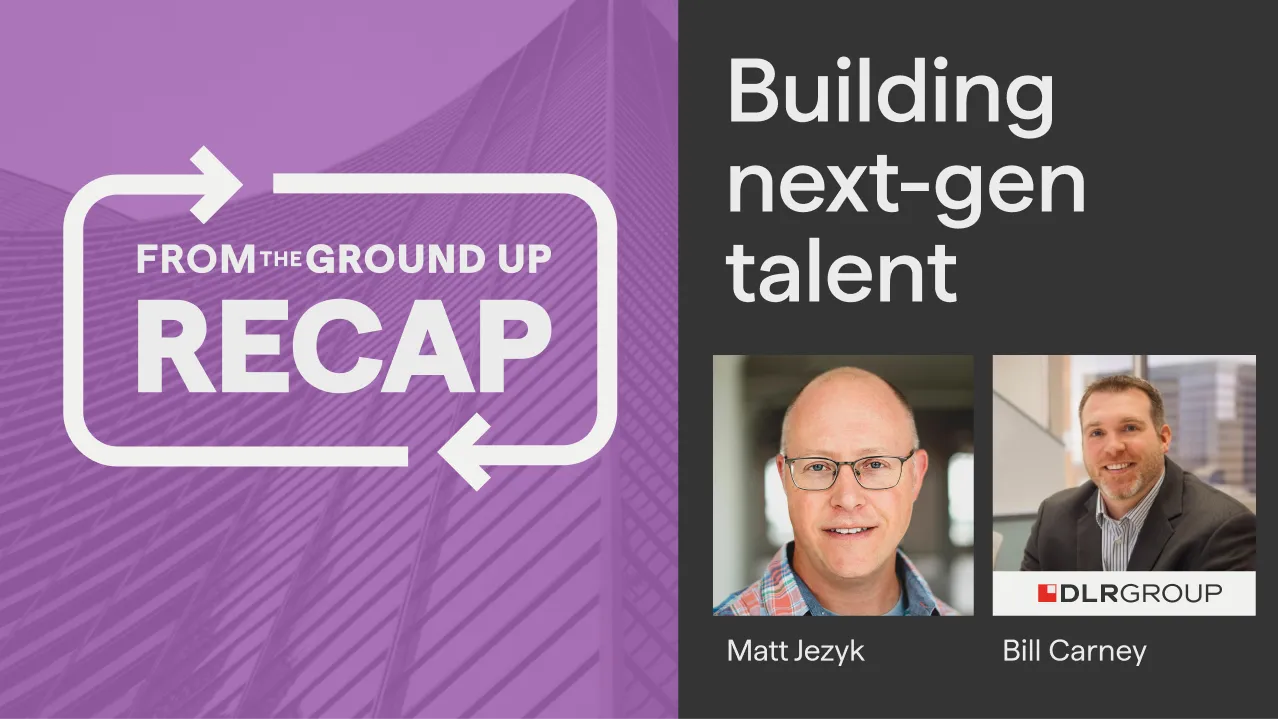
We hosted a live session of From the Ground Up at our annual offsite last week, and the conversation landed on something the whole AEC industry is grappling with: how we develop talent in an era of rapid change.
Matt Jezyk, VP Industry Strategy and Solutions at Motif, sat down with Bill Carney, Design Technology Leader at DLR Group, to talk about something that doesn't get enough airtime: how firms develop talent, adapt to change, and lead teams through rapid technological shifts.
Bill has spent two decades in design technology, from implementing Revit in 2004 to now leading a diverse team of architects, developers, data scientists, and GIS specialists. His perspective on what's actually working (and what isn't) was refreshingly honest.
TLDR: Mentorship needs to flow both ways, automation should free time for design (not just cut costs), and AI tools demand more intentionality, not less.
Why mentorship in architecture firms needs to go both ways
One of the biggest themes from the conversation was the evolving nature of mentorship in AEC. Experienced practitioners still need to teach the next generation why design decisions matter and the intentionality behind the work. But younger team members are bringing invaluable knowledge about new tools, AI workflows, and emerging approaches that senior leaders need to learn too.
The challenge is finding time for it. As Bill put it, "The person who needs to mentor an apprentice is the person with the highest billable hours in the firm." The solution isn't rigid mentorship programs. It's creating space for organic learning and being intentional about pairing people on projects where knowledge can flow in both directions.
How automation creates time for design, not just cost savings
DLR Group's philosophy centers on what Bill calls "automating the mundane," focusing on repetitive tasks that drain energy and don't develop skills. The goal isn't just efficiency metrics. It's freeing architects, engineers, and designers to focus on the work they actually want to do: designing, problem-solving, and creating.
Their approach follows the 10x rule for automation. If automating something doesn't save at least ten times the effort it takes to build, it's probably not worth pursuing. The focus should be on big rocks first, meaning changes that shave a week or month off a project rather than incremental gains that don't move the needle.
There's also a delicate balance between automation and education. Bill noted that refusing to automate a task "because I won't learn it" can backfire if competitors are already automating that same work. But automating too early means team members miss foundational skills. The key is being intentional about when someone earns the shortcut, and DLR Group is even exploring gamified approaches where automation tools "unlock" after completing tasks manually.
Why AI in architecture requires more intentionality, not less
With generative AI tools producing renderings, layouts, and even code in minutes, there's a real risk of losing rigor in the design process. Bill has seen it firsthand: faster outputs don't always mean better thinking. The teams that will thrive are the ones that pair speed with purpose, understanding why they're making choices, not just how to make them quickly.
This shift means quality control and design review become even more critical. When production accelerates, senior team members need to invest the time savings back into teaching and reviewing, not just taking on more projects.
Bill's advice for anyone building a career in AEC: think in terms of a "major and a minor." Your primary discipline—architecture, engineering, interiors—needs a complementary skill like data analysis, psychology, or programming. Two areas of strength make you resilient no matter how the tools change.
Key takeaways for AEC leaders
Technology is changing what's possible in the built environment. But the firms that will lead aren't just the ones with the best tools. They're the ones investing in people, creating space for learning, and staying intentional about the work that matters.
The conversation surfaced a few clear priorities for firm leaders thinking about talent development:
- Build mentorship into project workflows rather than separate programs
- Use the 10x rule to prioritize automation investments
- Reinvest time savings from AI into teaching and quality control
- Encourage team members to develop complementary skills alongside their core discipline
From the Ground Up is Motif's webinar series exploring how technology is reshaping AEC practice. Watch the series on YouTube.