

The brief
Cities are made of small things.
Cities are made of small things. A bench that nobody sits on, a bus stop that offers no shelter, a food kiosk that nobody queues for. These are not minor failures. They are the texture of daily public life, repeated thousands of times across every street. This competition asks you to design them better, and to make the case to the people who decide.
You are not just designing objects. You are designing a coherent urban family of street furniture for your city, that a city official could look at and say: yes, we want this on our streets. Every decision must be grounded in genuine environmental thinking: the materials you choose, how they are made, where they come from, and what happens to them when their life is over.
Choose your city.
Your designs must be specific to a real city, any city, anywhere in the world. A solution designed for Helsinki will not work in Lagos. A proposal for Singapore will not translate to Mexico City. You must demonstrate that you have understood your chosen city: its climate, its street culture, its maintenance capacity, and the communities who use its public spaces every day. And as you know your own city best, we invite you to do it for the place you live.
What you'll design
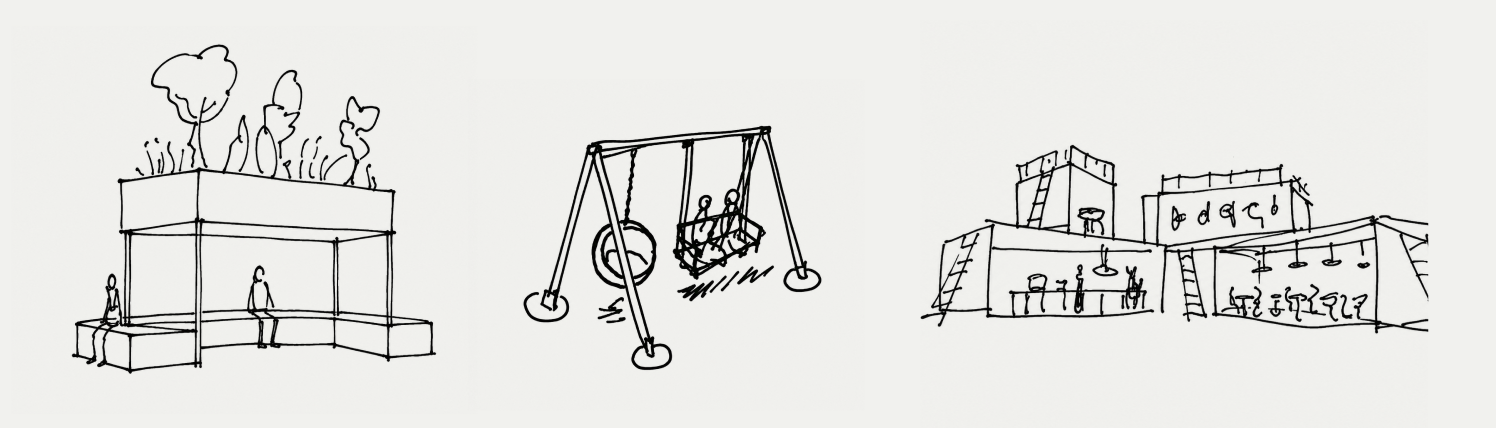
Three objects
Using a coherent material palette and a shared design language, design the following three objects as a unified urban family.
01 A City Bench
A single seat for outdoor public use. Design it for long sitting and short waiting. Consider who uses it and who is currently excluded: the elderly, the disabled, people carrying bags, people who might need to rest. Consider how it is anchored, how it drains, how it is cleaned, and how it survives a decade of daily use in the climate you have chosen. Design it to last 50 years, not five. Consider what happens to it when those 50 years are over.
02 A Bus Stop
Not just a pole and a sign. A place. It must offer meaningful shelter from the dominant weather condition of your chosen city: sun, rain, wind, or snow. It must accommodate timetable information, be accessible to wheelchair users, and work equally well at 7am and 11pm. Consider lighting, sightlines, and personal safety. Consider what it communicates to the person waiting: that the city values their time.
03 A Community Food Kiosk
A community food kiosk that serves as both stage and sanctuary. On most days, it showcases emerging young chefs, a rotating platform for new culinary voices. One day each week, the same structure operates as a distribution hub for the unhoused and food-insecure. At its core sits a small but fully viable commercial kitchen supporting both programs. Design the kiosk, kitchen included, from sustainable, responsibly sourced materials, with every component engineered for disassembly, transport, and reassembly at new sites without specialized tools or wasted material.
How it works
4 prize categories
Judged Showcase
Submit a full proposal. One entry per person or team. Reviewed by a panel of practicing architects and designers.
Use any tools
Design however you work. Present in Motif.
Model in Rhino. Sketch on paper. Build in Blender or Revit or SketchUp. Use AutoCAD, hand drawing, physical models, whatever combination you want. Your design and modeling process is your own.
The final submission, however, must be presented and visualized entirely within Motif, including all renderings and any video content. Post-processing in third-party software (e.g., Photoshop, Lightroom) is not permitted. What you create in Motif is what you submit.
How well you use the platform is part of the judging.
The judges

What to submit
Five things to put in your submission
Your submission is a design proposal to a city council, a municipal transport authority, or an urban planning department. It must be legible to a non-architect. It must make the case not just that your design is beautiful, but that it works for the city's budget, its maintenance crews, its climate, and the full range of people who will use it every day.
Deliverables
01 Project writeup
Tell us the story of your design and how you got there. Your writeup should include three distinct parts:
02 Design drawings
All three objects, at appropriate scale, with at least one detail showing how they're assembled or fixed.
03 Rendered views
Each object in its actual street context, in a range of visual styles, made with Motif's AI rendering.
04 Videos
Generated with Motif's AI video feature. Tell the story.
Criteria
How you’ll be judged
Entries are scored by a panel of judges. Scores are independent: a strong presentation does not compensate for a weak design, and strong environmental thinking does not excuse poor spatial quality.
Design quality (45 pts)
Coherence as a family (10)
Do the three objects share a design language, in proportion, material expression, or constructive logic, that makes them read as a system? A family is not a matching set; it is a set of related decisions.
Spatial and formal quality (15)
Are these genuinely well-designed objects? Does the bus stop create a sense of place? Does the bench invite sitting? Does the bin resolve itself with dignity? Good street furniture is quiet, considered, and slightly better than you expect.
Specificity to context (10)
Does the design demonstrate a real understanding of the chosen city? Climate response, cultural fit, scale relative to the streetscape, and sensitivity to who actually uses public space in that place are all assessed here. Generic solutions score low.
Sustainable materials and production (10)
Are the material choices appropriate, locally grounded, and honestly argued? Is there a plausible end-of-life scenario? Judges look for genuine thought and honest trade-offs, not greenwashing or vague claims.
Architectural storytelling (15 pts)
Does the submission tell a compelling design story? Is there a clear idea, not just a collection of objects, but a position, an argument, a reason this proposal exists? The best submissions will make a judge feel something about the street before they read a word.
Use of the platform (40 pts)
Does the submission use Motif to present the work in a way that print or a PDF could not? Contextual 3D views, renderings, videos, presentation, 2D and 3D mix, any platform-native feature used with genuine intent will score here.
A note from the judges: Your design process is your own. Model in Rhino, sketch by hand, build in Blender or Revit, work however you work. But when it comes to presenting your proposal, Motif is where it lives. Judges will be looking for work where the presentation feels native to Motif: not only exported from somewhere else and dropped in, but built in it, alive in it, and better for it.
Timeline
June 3
July 13
Jul 30
Aug 30
Submit
Sign up below and we'll send you a free month of Motif, plus a link to submit your final deliverables when you're ready.
Eligibility & rules
A few things to know before you enter.
- Open to US residents only, excluding Arizona. If you're outside the United States or based in Arizona, you are not eligible to enter.
- Enter alone or as a team. No team size limit. Interdisciplinary teams encouraged. If you submit as a team, name a primary contact, who is responsible for prize distribution.
- Submissions must be original work.
- Presented in Motif. Entrants may design and model using any tools of their choice (e.g., Rhino, SketchUp, Blender, Revit, AutoCAD, hand drawing, physical models, or any combination). The final submission, however, must be presented and visualized entirely within Motif, including all renderings and any video content. Post-processing in third-party software (e.g., Photoshop, Lightroom) is not permitted.
- You own your design. By entering, you give Motif permission to feature your submission in the gallery, on social, and in marketing materials, always with credit. You're free to publish, license, or use your work elsewhere however you want
